Wednesday, 30 April 2014

Omar Kamal


Today Al and I made a spontaneous trip to Cardiff where we met up with Omar Kamal in order to document his performances. Omar Kamal is a jazz singer from Palestine, who performs several live concerts around various parts of the UK. This was decided last minute as it depended on whether or not we could manage our other deadlines. 

We shot in the Music Hall at the University of Cardiff where there was a grand piano already on stage. Upon our arrival it was a matter of setting up the sound, lights, camera equipment and ideas. Omar’s team did all the sound equalising whilst Safian and Al set up the visuals. During the shoot I worked with the lighting and as a camera operator for one of the three DSLRs.


At the end of the day we only had enough time to record five of his songs (because Al and I had to catch the bus back to London, and it’s a three hour journey each way). However, we did leave the shoot with a promise for future collaborations with Omar. He is vocal talent that deserves to be recognised. Most definitely looking forward to working with him this June!

See below, a sample of the rushes from Omar's shoot: 


Saturday, 26 April 2014

The Buffoon Society


I was casually talking to Laura Olohan (BA (Hons) Fine Art, Year 2) about the definition of performance art because I was having a hard time forming a definition for my own works. Whilst explaining the idea of incorporating dance into her performances Laura brought up the topic that she was "going to be working with dancers that are coming into Uni." I realised she was talking about Rachel Palmer's "The Dance Movement" collaborative, and asked her what she was going to do.

Laura mentioned that she was going to present the "Buffoon Society" concept she had been working on, which was why she was preparing masks at the time. Laura mentioned that "she just had no idea how she was going to get it filmed and documented." This is when I suggested that this would be a perfect opportunity to collaborate.

This is where Robert Smith, Abdulaziz Lamlum and myself were recruited as camera operators. We were inducted to use the glidecam, which is how we came up with most of the footage for this interview with Laura.

Working collaboratively with "The Dance Movement" and Laura Olohan's concept has deepened my appreciation for performance art, and how it encompasses the space in which it takes place. Using the glidecam was perfect because it invited the cameraman and audience to interact with the dance, which hopefully recreates some of the awe found in performance art. 

Sunday, 20 April 2014

Fields & Frames: Hand of the Artist


It came to my attention that artists such as Grayson Perry are commissioning other people to create his tapestries for him. On one hand, the tapestries he designs are extremely elaborate and beautiful. Perhaps it is a little too ambitious for one person to work on alone. On the other hand, can he really call it his own work? What if his way of embroidering differs slightly to his assistant's? Taking a purists's approach towards this: it means that Perry's piece is no longer truly of his own expression. This question made me ponder on the idea of authorship and the process behind creating Fine Art.

Bearing this in mind I decided to approach Melissa Dodd, a mixed media Artist. By approaching her I hoped to achieve some kind of understanding about the approach and process of surface-orientated works (I am more of a conceptual and performance artist in my own works). After our multiple discussions about the philosophy behind Fine Art, we concluded that the act behind creation is quite an intimate and irreplaceable notion. As a result I thought it would be interesting to observe and document her painting.


The cinematography was inspired by Tony Hill's "A Short History of the Wheel." It showed a wheel being framed at the centre of every shot, whilst the background would rotate in its circular motion instead.


I was inspired by how this challenged the viewer to pay attention to every part of the frame instead of what was in focus, as the focused subject matter was static. By doing this in my video I was challenging my viewers to watch every part of what was framed, as it is all important. The development of the painting and the hand of the artist were both significant in the creation of this piece of Art.

Friday, 21 March 2014

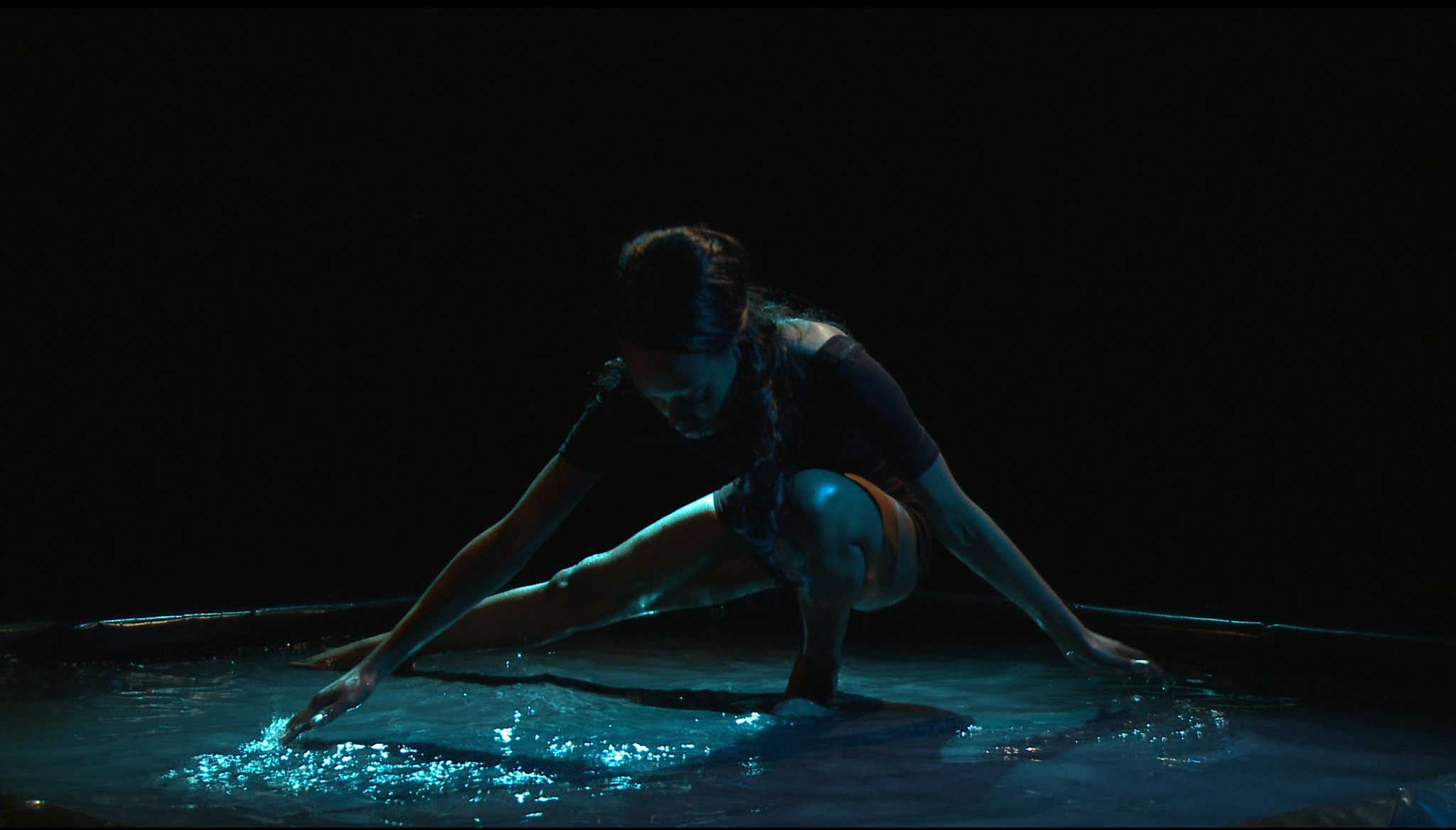
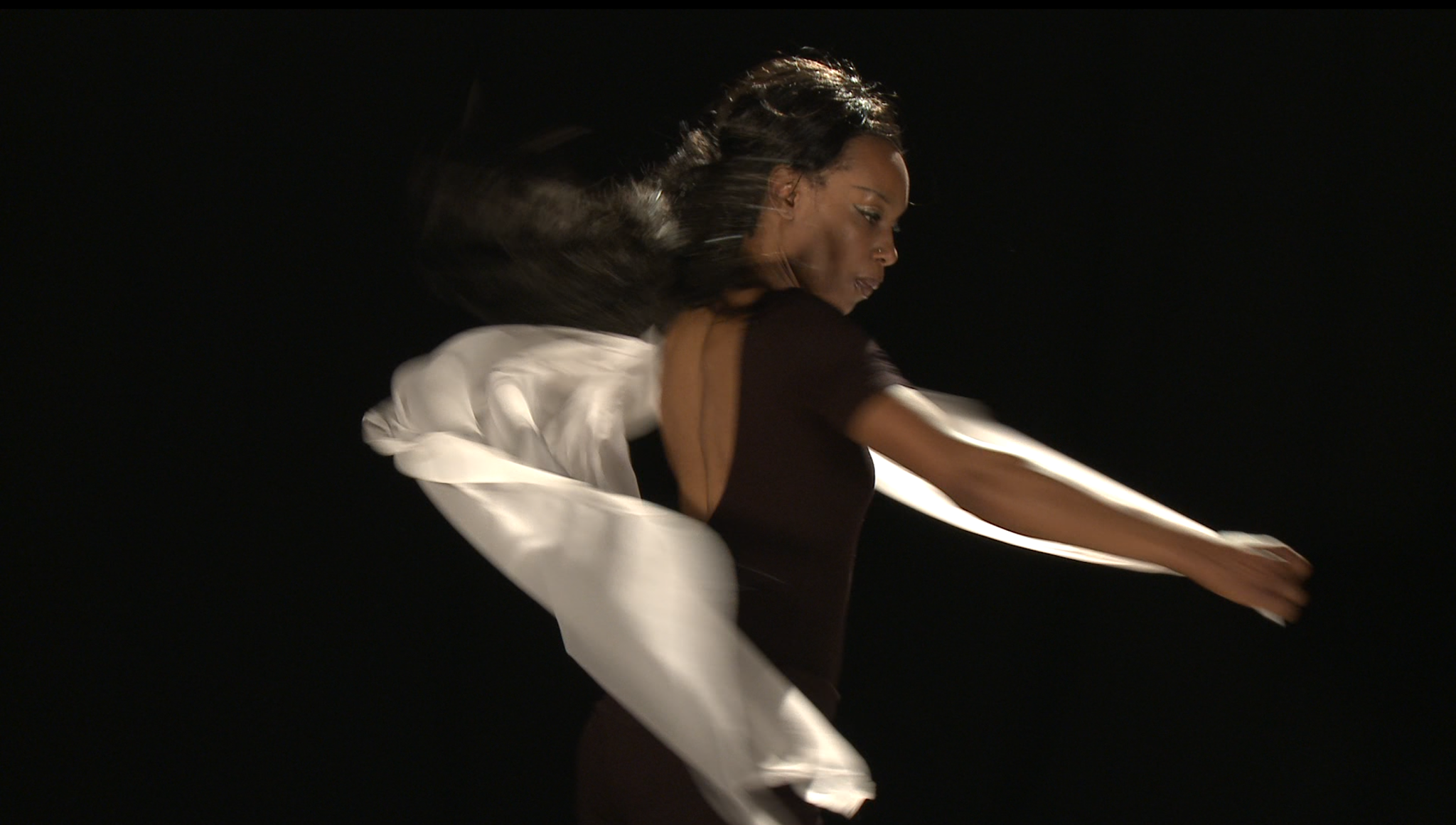
Screenshots of Rushes


Post-Shoot Thoughts: Day Three


On our final day we were set up and ready to shoot our Earth scene. We had constructed the sand pit the night before only to realise that 150kg of sand was barely enough. I took action and reserved an additional 75kg of sand from Argos. We picked up the additional sand bags an hour before the shoot and it completed the look of our set. Needless to say the guys hated carrying 30kg's worth of sand each, first thing in the morning! 

We had first aid kids and eye baths on set, as we anticipated sand getting into our dancers eyes. Fortunately we had no issues with this at all. 

One thing that did go wrong was our slider rig. The connecting screw that attached the camera to the rig kept breaking off which set us back by an hour. Despite my impatient nature for the "boys and their toys" the guys actually got really amazing shots.

It was at this point I realised that (for the first time in my life) my expectations for a group project were exceeded. When reviewing the rushes I was extremely proud of Al, Callam and Jacob. None of this would have been possible without them.


Post-Shoot Thoughts: Day Two


On the second day of shooting Al decided that Callam and I were to switch roles. This meant he was the acting cinematographer whilst I took care of the production, crew and cast's needs. This change in responsibility was far more productive as I felt more in control of my role, rather than being uncertain of the shots I was capturing with the EX3. 

Throughout the shoot of the second day I was on constant watch for spilling water. I would be mopping up whenever necessary to minimise the electrocution hazard that water posed. Too make sure the dancer was comfortable I would be on constant watch for her needs - whether it was to provide her with a towel or a kettle of hot water to heat up the pool. Alongside all these responsibilities I would be logging our shots and loading the clapperboard. 

The shoot ended successfully. Cleaning up was made easier with the water vacuum we borrowed from UCA's workshop studios. In retrospect our dancer had said that she had the most fun shooting with water! Water must certainly be therapeutic as the crew also really enjoyed shooting with water. It certainly juxtaposes the high levels of stress we were faced with the day before.


Post-Shoot Thoughts: Day One


As prepared as we tried to be, nothing could have predicted Jacob's admittance into the hospital on our first morning. This meant we would have to adapt as a group and perform the roles of cinematographer whilst Jacob was gone. Al took on responsibility for lighting, camera/technical settings and directing. Callam acted as our runner, gaffer, clapper and was responsible for logging shots. I took on the responsibility of framing the cinematography and taking care of our dancer. 


Initially I thought I could step up to perform as cinematographer however the end of the day showed that the pressure was too much for me. I was very frantic about sticking to the schedule as we had to film two elements in the same day. As stressful as it was, we got all the shots we wanted for Fire and the essential shots for Air. Jacob did show up towards the end of the shoot (against doctor's orders). Whilst on set we would consult him for his opinion on lighting and framing.

What I learnt from the first day of shooting was to be versatile and to know your limits. It was after this day I realised it was best if I didn't continue as substitute cinematographer. It was surpassing my capabilities when combined with the responsibilities of producing. On the plus side, Al taught me how to use Sony EX3 in under a minute which I found pretty impressive.